Data Management Unit in Math


During the next few weeks, your child will design surveys to collect data; sort and organize data using Venn diagrams and tally charts; represent data by creating pictographs and bar graphs with scales of 2, 5, and 10; and describe and interpret bar graphs, pictographs, and circle graphs. Your child will explore what makes a survey question a good one, how best to organize and display a given data set, and what sorts of things a graph can tell us.

Throughout this time, you and your child can practice some activities such as the following:

  • Your child can count some items that come in large quantities (e.g., straws) and create a pictograph with a scale of 10 to represent the items.
  • Your child can design a question, conduct a survey, tally the results, and display the data in a bar graph. For example, they could ask, “How many of my books do I want to read, or read again: soon, someday, or never?” and then interpret the results.
  • Your child could look in the media for examples of bar graphs with scales and tell you 3 or 4 things the graph shows. The scale might be larger than 10; they could discuss why the scale used is appropriate.
  • When sharing a circular item, such as a pie, encourage your child to compare the sizes of slices (cut from the centre); this is similar to a circle graph.

PLEASE REMEMBER: Prodigy is aligned with the Ontario curriculum and your child does have an account. Every Sunday I coordinate the challenges of the game to align with the strand of Math and expectations I am teaching that week. Prodigy is a part of our Homework Program.

Social Studies Diorama Pictures

I’m sure you have had the opportunity to look through your child’s Friday ‘Folio. The majority of students worked so hard on this cummulative task and shared some interesting facts with the class about their particular type of community and its’s special features. Look at the smiles on these kiddos -what a great group!

Rainy Day? Time to Work on One Minute Monologue Perhaps

Friendly reminder that the one minute monologues will be presented this Thursday. I hope everyone is having a great time with this mini project. Practice, practice, practice! On Tuesday, students will have a chance to practice during class time and transfer notes onto cue cards.

Here are some great examples done by kids your age. Pay close attention to their expression, loud voices and gestures. Some even have them fully memorized -amazing!

WITS is Back!

Last Thursday, the students at W. Erskine Johnston P.S. attended an assembly that reintroduced them to the school-wide program that we started four years ago called WITS. The WITS program brings together schools, families, and the community to create a responsive environment that helps elementary school children deal with bullying and peer victimization.


WITS Primary Program (For K-3):

  • Stands for Walk away, Ignore, Talk it out and Seek help.
  • Teaches Kindergarten to Grade 3 children to make safe and positive choices about peer conflict.
  • The program provides a common language children and the adults in their environment can use to talk about and respond to peer victimization.


 LEADS Program (For Grades 4-6):

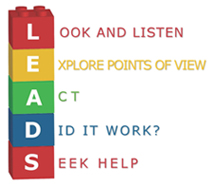
LEADS

  • Stands for Look and listen, Explore points of view, Act, Did it work? and Seek help.
  • Teaches problem-solving strategies to help Grade 4-6 children deal with conflict and stay safe.
  • Provides developmentally appropriate strategies and resources to older elementary so they can become WITS Leaders in their school.

Look & Listen

  • Develop an understanding of what can be learned about others’ feelings, intentions, and inner thoughts by carefully observing their behaviours and nonverbal expressions, and by listening to others

Explore Points of View

  • Understand others’ points of view
  • See how words, thoughts and feelings can vary for different people
  • Look and listen to words, thoughts and feelings
  • Learn to understand indirect or relational aggression

Act

  • Identify conflicts that involve direct aggression (hitting, pushing, threatening) or relational aggression (excluding people, ignoring, spreading rumours, teasing) by looking and listening
  • Brainstorm and act out solutions to identified conflicts

Did it Work?

  • Identify the short- and long-term consequences of actions chosen to deal with a conflict
  • Identify factors that suggest a solution has worked
  • Demonstrate social responsibility by solving problems and resolving conflicts in peaceful ways
  • Learn to exercise democratic rights and responsibilities
  • Recognize different types of bullying and the roles of bystanders in refusing and reporting it
  • Learn effective leadership skills

Seek Help

  • Learn when to seek help from an adult and when to handle a problem independently
  • Learn to use the WITS LEADS problem solving skills together
  • Learn to identify and solve problems

Remember that telling is not tattling. If you’re faced with bullying and you walk away to get help, you are helping to make your school and your community a safe and fun place for kids to be!

Give the Gift of Reading

Image result for scholastic and christmas imageThis holiday season why not give the gift of reading? I have received some emails asking if I could keep orders aside and parents will pick up themselves when the books have arrived. YES! I will do that for you. What a great gift idea! This months scholastic orders are due to me by Wednesday, November 4th.  Send your orders in via a sealed envelope if you want to keep the books a secret from you lil’ munchkin!

One-Minute Monologues

Please check your child’s agenda for information on an upcoming oral fluency assignment – a one-minute monologue. Your child will have a bit of time to work on his/her monologue in class,  but the majority of prep work needs to be done at home. Students will be presenting on ThursdayOctober 31st. Look at the rubric for how this assignment will be assessed on the back of the sheet I sent home today.

Below are some great examples of kids delivering one-minute monologues! Pay close attention to the kids’ expressions, loud voices and hand gestures. They even have their monologue fully memorized – amazing! (You may use cue cards if needed – but don’t simply read from them!) Watch these “Level 4” examples in action!

We hope that everyone will have  a great time with this mini assignment. Practice, practice, practice, we do many oral presentations in Grade 3.


Happy Thanksgiving & then some …

Image result for happy thanksgivingFrom my family to yours, I want to extend warm wishes for a lovely Thanksgiving long weekend. On Friday the kids and I joined our desks together in proper “feast” form and enjoyed our lunches and each taking a turn discussing what we were grateful for this year. Everyone was so engaged and respectful as everyone took turns sharing what warms their heart this year. Take a peek below and see if you can identify your child’s writing and what they are thankful for.


In Writing Workshop and Media Literacy, we have been working hard on identifying “awesome adjectives” and descriptive writing in our Haunted House for Sale writing Advertisements. This week we begin a study on the five basic parts of a friendly letter (heading, greeting, body, closing and signature) and will moved on to persuasive letter-writing. When writing a persuasive piece, the writer must be aware of his/her audience and the purpose for writing. Reasons that support the writer’s opinion are included in the main body of the letter to convince or persuade the reader to do something or change his thinking about a given topic.  This will lead up to our next writing piece – ‘Persuasive Pumpkin Letters.’ I have used the following read-aloud to help the students better understand these persuasive and letter-writing concepts.
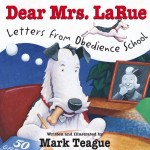
mrs larue

In Reading Workshop, the students have been working on their book worm body parts and we have discussed the many ways that students select books to read for independent reading. A goal for the students is to increase their stamina when reading independently. Please continue to support your child at home with his/her daily reading as well as helping him/her find “just right books” to read. I have also modeled during various read alouds how good readers ‘check for understanding’ as they read by stopping periodically and reflecting on their understanding of the text. Summarization, retelling, and paraphrasing are often used as specific techniques. The children will be practicing these strategies while reading independently and with a partner/small groups.

Social Studies: We continue with our unit on People and Environments: Living and Working in Ontario. We are looking specifically at:

  • the different needs of different communities and how these needs are met.
  • how land is used and developed in different ways to meet the needs of communities.
  • different types of communities and their land use (e.g., mining, fishing, forestry, etc.).
  • why it is important to work in a community and what jobs are available in different communities.
  • this week the students will work in their groups on creating their DIORAMA’s to depict the community they are studying. See the chart below indicating which community your child is working on. Brainstorm with them ideas to make their DIORAMA great as it will be an at school project. Please send in recyclables (old magazines, netting, cloth, ribbon, plastic bottle lids, coloured cardboard as well we are looking for boot boxes, not shoe boxes as our structure for the DIORAMA’s)


In Math, we start this week with our unit continuing on with numeration by looking at money and making change up to an amount of $10. Adding, subtracting money and demonstrating different ways to show the same money total. Please send in any food flyers that you no longer need on Tuesday.

I LOVE to see ALL students engaged, focused, and contributing during class and throughout the school day!! Lots of rest and a fabulous lunch go a long way for these little bodies!

I am also happy to see so many students in my class interested in joining the RECESS GUITAR CLUB and the Primary Sing-A-Long Club which will run all year long! 

Early Morning Reminder -Picture Day is Today!

Picture Day is Nearing! Say Cheese!

Thursday, October 10th, is our school’s Photo Day. A photographer from Earl Havlin Photography will be taking individual and class photos of all our students and classes. For best results, dress in bright colours and try to avoid white or black. The background will be blue. All students will receive a free class photo regardless if you order any packages. The photographer is also offering Family Photo Night that same night – from 4:00-6:00pm. Retake Day will be Monday, Nov. 4th.

Number Sense & Numeration Test Next Week

Students will be writing a numeration unit test next Wednesday (Oct. 9th). To help prepare for this test, I encourage all students to go to the Nelson Math 3 website by clicking here and, between now and then, complete the following online practice tests for chapter 2:

Lesson 1: Representing Numbers

Lesson 2: Renaming Numbers

Lesson 4: Rounding to Estimate

Lesson 5: Comparing and Ordering

Lesson 7: Ordinal Numbers

The students will be working on these quizzes on the chromebooks in class as well, but it will not hurt to review these questions again at home! Prodigy has also been aligned with what I have been teaching in class -a very useful resource! Students can also go over the place value and number forms related activities at Grade Three Under the Sea. As you can see, there are lots of ways your child can prepare for this test!

Our focus in Math will switch to money next week.