Last Thursday, the students at W. Erskine Johnston P.S. attended an assembly that reintroduced them to the school-wide program that we started four years ago called WITS. The WITS program brings together schools, families, and the community to create a responsive environment that helps elementary school children deal with bullying and peer victimization.
WITS Primary Program (For K-3):
- Stands for Walk away, Ignore, Talk it out and Seek help.
- Teaches Kindergarten to Grade 3 children to make safe and positive choices about peer conflict.
- The program provides a common language children and the adults in their environment can use to talk about and respond to peer victimization.


LEADS Program (For Grades 4-6):
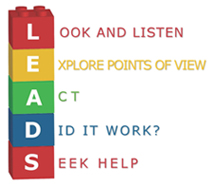
- Stands for Look and listen, Explore points of view, Act, Did it work? and Seek help.
- Teaches problem-solving strategies to help Grade 4-6 children deal with conflict and stay safe.
- Provides developmentally appropriate strategies and resources to older elementary so they can become WITS Leaders in their school.
Look & Listen
- Develop an understanding of what can be learned about others’ feelings, intentions, and inner thoughts by carefully observing their behaviours and nonverbal expressions, and by listening to others
Explore Points of View
- Understand others’ points of view
- See how words, thoughts and feelings can vary for different people
- Look and listen to words, thoughts and feelings
- Learn to understand indirect or relational aggression
Act
- Identify conflicts that involve direct aggression (hitting, pushing, threatening) or relational aggression (excluding people, ignoring, spreading rumours, teasing) by looking and listening
- Brainstorm and act out solutions to identified conflicts
Did it Work?
- Identify the short- and long-term consequences of actions chosen to deal with a conflict
- Identify factors that suggest a solution has worked
- Demonstrate social responsibility by solving problems and resolving conflicts in peaceful ways
- Learn to exercise democratic rights and responsibilities
- Recognize different types of bullying and the roles of bystanders in refusing and reporting it
- Learn effective leadership skills
Seek Help
- Learn when to seek help from an adult and when to handle a problem independently
- Learn to use the WITS LEADS problem solving skills together
- Learn to identify and solve problems